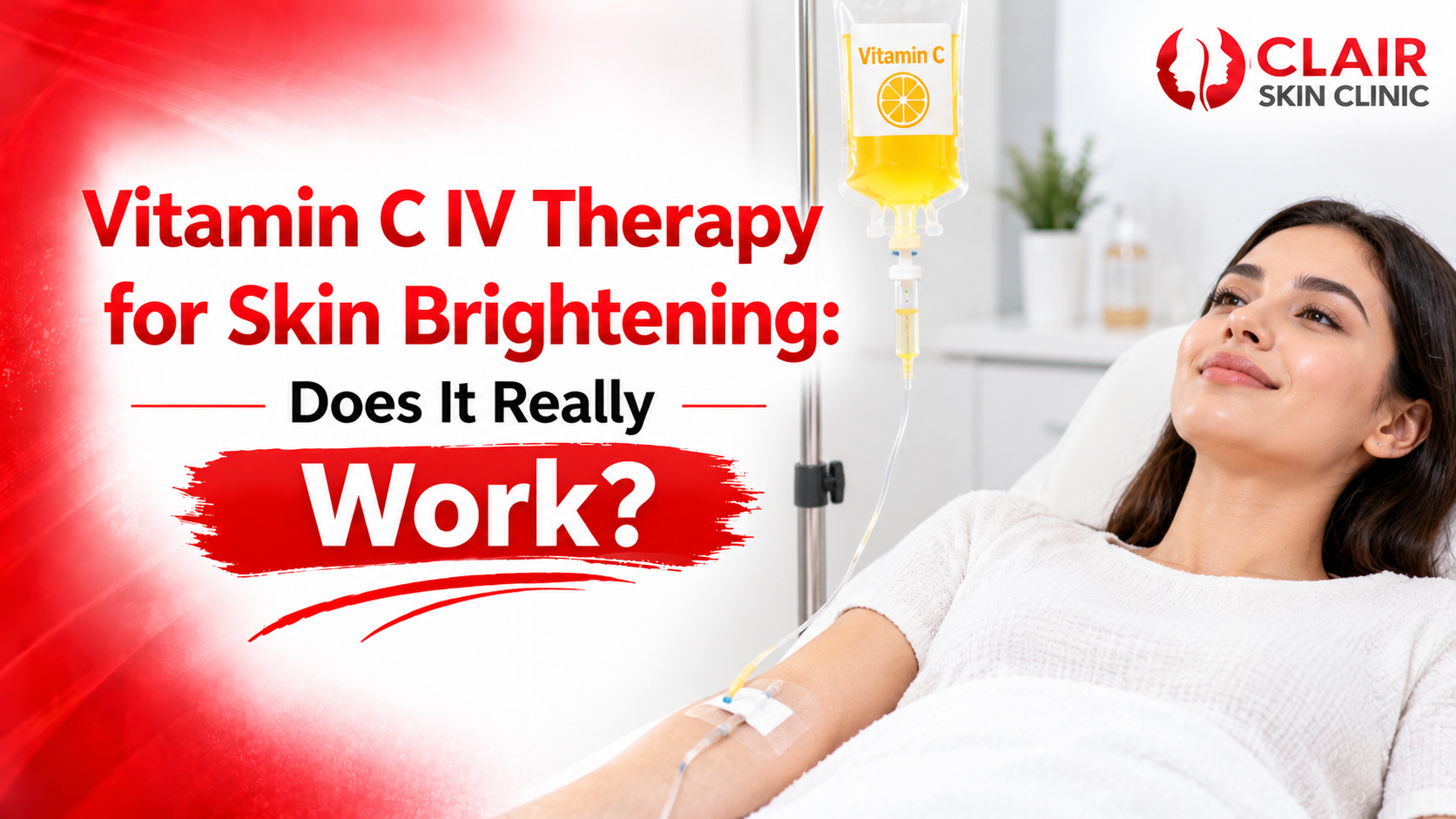
Vitamin C is one of the most well-known nutrients associated with healthy-looking skin. It plays an important role in antioxidant protection and collagen production and is widely used in skincare products. More recently, intravenous (IV) vitamin C therapy has gained attention in aesthetic and wellness settings, with claims that it can improve skin brightness, support an even complexion, and provide antioxidant benefits.
But does vitamin C delivered through an IV really brighten the skin? The answer is more nuanced than many beauty claims suggest. While vitamin C has established biological functions and there is some clinical interest in intravenous vitamin C, evidence specifically supporting IV vitamin C as a skin-brightening treatment remains limited.
Table of Contents
ToggleWhat Is IV Vitamin C Therapy?
IV vitamin C therapy involves administering vitamin C directly into a vein. Unlike oral supplements, which pass through the digestive system, intravenous administration delivers the nutrient directly into the bloodstream.
IV vitamin C may be included in wellness infusions containing other vitamins, minerals, antioxidants, or nutrients. The exact formulation and concentration can vary between clinics.
Because IV therapy involves inserting a needle into a vein and delivering substances directly into the bloodstream, it should only be performed by qualified healthcare professionals following appropriate medical assessment and safety protocols.
Also Read: Glutathione IV Therapy In Delhi, Glutathione IV Drip For Skin Whitening
How Does Vitamin C Affect the Skin?
Vitamin C is an essential nutrient with several important functions relevant to skin health.
Antioxidant Protection
Vitamin C acts as an antioxidant and helps protect cells from oxidative stress. Oxidative stress occurs when there is an imbalance between potentially damaging free radicals and the body’s antioxidant defenses.
Environmental factors such as ultraviolet radiation and pollution can contribute to oxidative stress in the skin. Vitamin C is therefore an important component of the body’s antioxidant system.
Collagen Production
Vitamin C is also involved in collagen synthesis. Collagen is an important structural protein that helps maintain the strength and elasticity of skin.
Adequate vitamin C is therefore necessary for normal skin function and tissue repair.
Pigmentation and Melanin
Vitamin C has also been investigated for its potential effects on pigmentation pathways. This is one reason topical vitamin C is commonly used in skincare formulations designed to improve the appearance of uneven skin tone.
However, the biological effects of vitamin C do not automatically mean that IV vitamin C will produce dramatic or predictable skin-lightening results.
Also Read: Skin Whitening Treatment in Delhi
Can IV Vitamin C Brighten Your Skin?
This is where it is important to separate potential benefits from proven outcomes.
Vitamin C has well-established physiological roles, but there is limited high-quality clinical evidence demonstrating that IV vitamin C consistently produces significant skin brightening in healthy individuals.
Some aesthetic and wellness clinics promote IV vitamin C as a way to improve radiance or complexion. However, these claims should not be interpreted as proof that IV vitamin C can treat pigmentation disorders or permanently lighten the natural skin tone.
A more appropriate expectation is that vitamin C may support overall nutritional and antioxidant status, while any visible skin changes can vary considerably between individuals.
Also Read: What are the Benefits of Skin Whitening Treatment
What About Melasma and Post-Laser Hyperpigmentation?
Vitamin C has attracted particular interest in pigmentation concerns such as melasma and post-inflammatory hyperpigmentation.
Melasma is a common condition characterized by patches of increased pigmentation, often affecting the face. Treatment can be challenging and typically involves sun protection and dermatologist-guided topical or procedural treatments.
A published case report described a 51-year-old Chinese woman with post-laser hyperpigmentation in whom intravenous vitamin C appeared to be useful. However, a case report represents an individual clinical observation rather than strong evidence that IV vitamin C is an established treatment for pigmentation.
Therefore, IV vitamin C should not currently be presented as a proven cure for melasma or post-laser hyperpigmentation.
Also Read: Dermatologist-Approved Facials for Glowing Skin
IV Vitamin C vs. Topical Vitamin C
Both topical and intravenous vitamin C have different purposes and routes of administration.
Topical vitamin C is applied directly to the skin and is commonly used in skincare routines for antioxidant protection and improving the appearance of uneven skin tone.
IV vitamin C delivers vitamin C into the bloodstream and is primarily used in medical or wellness settings for specific purposes. Its effect on skin brightness is less clearly established.
For pigmentation concerns, a dermatologist may recommend topical agents, sunscreen, prescription treatments, chemical peels, lasers, or other therapies depending on the diagnosis.
Also Read: Chemical Peel Treatment in Delhi
Are Results Immediate?
Claims of instant skin brightening should be approached cautiously.
Some people may feel that their skin looks fresher or more radiant after a wellness infusion, but this does not necessarily mean that pigmentation has been treated or that melanin production has been permanently changed.
Skin pigmentation conditions generally require consistent treatment and sun protection over time. Results depend on the underlying cause of pigmentation, skin type, hormonal influences, sun exposure, and the treatment used.
Is IV Vitamin C Safe?
IV therapy is a medical procedure and should not be considered risk-free simply because vitamin C is an essential nutrient.
Possible concerns with IV treatment can include:
- Pain or bruising at the injection site
- Infection or irritation
- Fluid-related complications
- Reactions to ingredients included in the infusion
- Potential complications associated with high-dose vitamin C in certain individuals
People with certain medical conditions, including some kidney-related disorders or conditions affecting vitamin C metabolism, may require particular caution.
A medical professional should review your health history and determine whether IV vitamin C is appropriate before treatment.
Who May Consider IV Vitamin C for Skin Wellness?
People interested in IV vitamin C for skin wellness should first discuss their goals with a qualified healthcare professional. It is especially important to seek professional evaluation if your concern involves persistent pigmentation, melasma, sudden changes in skin color, or pigmentation following a laser or other cosmetic procedure.
The treatment plan should address the underlying cause rather than focusing only on skin brightness.
The Bottom Line
Vitamin C is important for normal skin health, antioxidant protection, collagen production, and tissue repair. However, the evidence supporting IV vitamin C specifically as a skin-brightening treatment is still limited.
There is some clinical interest in IV vitamin C for pigmentation-related concerns, and individual reports have described potential benefits in specific situations. However, this is not enough to establish IV vitamin C as a standard treatment for melasma or hyperpigmentation.
If your goal is brighter, more even-looking skin, consistent sun protection and evidence-based skincare remain important. A dermatologist can assess your skin and recommend treatments based on the underlying cause of pigmentation.
IV vitamin C may have a role in selected medical or wellness settings, but it should be viewed as a medically supervised therapy rather than a guaranteed skin-whitening or pigmentation treatment.