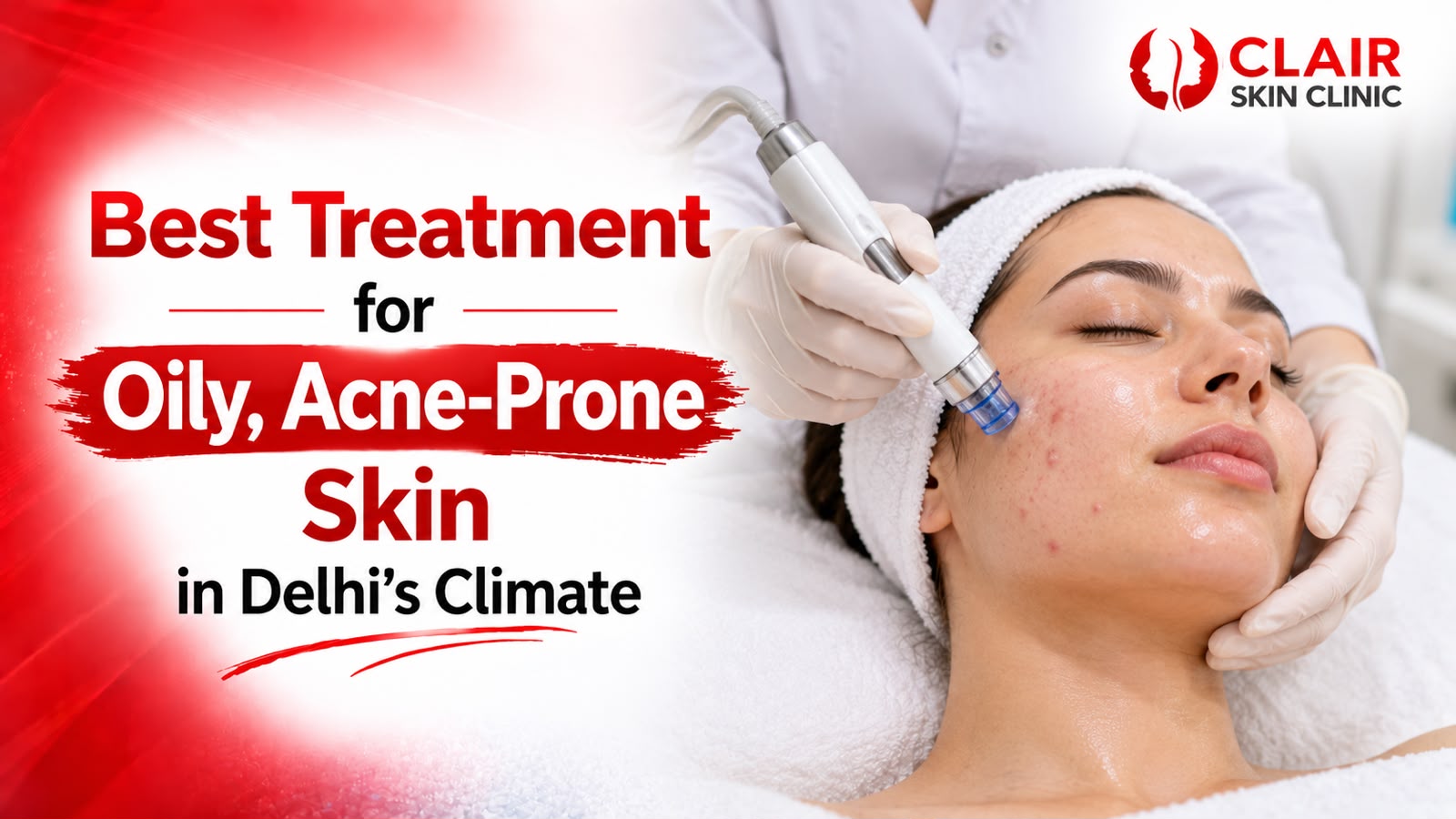
Delhi’s climate can be challenging for oily, acne-prone skin. Heat, humidity, sweating, dust, and air pollution can contribute to excess oil, clogged pores, irritation, and acne breakouts. At the same time, using overly harsh products to control oil can damage the skin barrier and sometimes make the skin feel even more irritated.
The best approach is not to remove all the oil from your skin, but to control excess sebum, keep pores clear, protect the skin barrier, and treat acne according to its type and severity. A dermatologist can help identify the causes of persistent breakouts and recommend a suitable treatment plan.
Table of Contents
ToggleWhy Does Delhi’s Climate Affect Oily, Acne-Prone Skin?
Oily skin occurs when the sebaceous glands produce excess sebum. Sebum helps protect and moisturize the skin, but excessive amounts can contribute to clogged pores and acne.
Delhi’s environmental conditions can make these concerns more noticeable. Heat and humidity may increase sweating and oiliness, while dust and pollution can accumulate on the skin. Frequent touching of the face, prolonged use of makeup, and an inconsistent skincare routine may further contribute to clogged pores.
However, climate is only one factor. Hormonal changes, genetics, stress, skincare products, and certain medications can also influence oil production and acne.
Also Read: Top 5 Skin Concerns HydraFacial Can Instantly Improve
What Is the Best Treatment for Oily, Acne-Prone Skin?
There is no single treatment that works for everyone. The appropriate option depends on whether you have blackheads, whiteheads, inflammatory pimples, cystic acne, acne marks, or a combination of concerns.
A dermatologist may recommend a combination of skincare and professional treatments.
Also Read: Acne Treatment in Delhi
1. Gentle Cleansing
Cleansing is an important part of managing oily skin, particularly in a hot and polluted environment. Wash your face gently up to twice a day and after excessive sweating.
Avoid aggressive scrubbing and very harsh cleansers. Stripping the skin of its natural oils can cause irritation and dryness.
A gentle cleanser may be preferred over a strong, drying face wash. Depending on your skin and acne, a dermatologist may also recommend ingredients such as salicylic acid, which can help remove excess oil and keep pores from becoming clogged.
2. Noncomedogenic Moisturizer
Oily skin still needs hydration. Skipping moisturizer can leave the skin feeling dry or irritated, particularly when using acne treatments.
Choose a lightweight, oil-free and noncomedogenic moisturizer that is less likely to clog pores. Gel or water-based formulations may feel more comfortable in Delhi’s warmer weather.
The right moisturizer also supports the skin barrier, which is important when using active acne treatments.
3. Sunscreen Every Day
Daily sunscreen is essential, especially if you have acne or post-acne marks. Sun exposure can contribute to pigmentation and make existing dark spots more noticeable.
Look for a broad-spectrum sunscreen with SPF 30 or higher and choose a formulation suitable for oily or acne-prone skin. Noncomedogenic and lightweight sunscreens can help reduce the heavy or greasy feeling that some people experience.
Reapply sunscreen when spending extended periods outdoors.
4. Salicylic Acid for Clogged Pores
Salicylic acid is a commonly used acne-fighting ingredient. It belongs to a group of ingredients called beta hydroxy acids and can help exfoliate inside pores.
It may be useful for people dealing with blackheads, whiteheads, and excess oil. However, using it too frequently can cause dryness or irritation.
Start gradually and follow your dermatologist’s recommendations, particularly if you are already using other active ingredients.
5. Retinoids for Acne
Topical retinoids may be recommended for certain types of acne. They can help prevent clogged pores and support the treatment of existing breakouts.
Because retinoids can initially cause dryness, irritation, or sensitivity, they should be introduced carefully. A dermatologist can recommend the appropriate formulation and frequency based on your skin.
If you are pregnant or planning pregnancy, discuss acne treatment options with your healthcare professional before using retinoid medications.
6. Professional Acne Treatments
When skincare alone does not adequately control acne, a dermatologist may consider professional treatments. Depending on the type and severity of acne, options may include chemical peels, acne-focused procedures, or other dermatologist-supervised treatments.
These treatments should be selected according to your skin type and acne pattern rather than simply because they are popular.
For active inflammatory or severe acne, medical treatment may be more appropriate than relying only on facials or home remedies.
Also Read: Best Facials for Glowing Skin
What About Home Remedies for Oily Skin?
Ingredients such as honey, aloe vera, oatmeal, cosmetic clay, and jojoba oil are commonly discussed as home remedies for oily skin. Some may have soothing or oil-absorbing properties, but evidence for many home remedies remains limited.
Natural does not automatically mean safe for every skin type. Lemon juice, for example, can irritate or burn the skin and may increase sensitivity to sunlight. Scrubbing the face with ingredients such as ground almonds can also cause irritation.
If you have acne-prone skin, it is generally better to avoid experimenting with multiple harsh DIY treatments at once. A simple, consistent routine is often easier to monitor and adjust.
Also Read: Why HydraFacial Treatment in Delhi
Skincare Mistakes to Avoid in Delhi
Managing oily skin does not mean trying to dry it out completely. Avoid these common mistakes:
Washing your face repeatedly throughout the day
Scrubbing active acne
Using harsh alcohol-based products
Skipping moisturizer
Sleeping with makeup on
Using heavy, pore-clogging cosmetics
Picking or squeezing pimples
Applying lemon or other irritating DIY ingredients directly to the skin
Using several strong active ingredients simultaneously
Skipping sunscreen because your skin feels oily
Blotting papers can also be useful during the day if you experience excessive shine. Press them gently against oily areas instead of rubbing the skin.
Also Read: Why HydraFacial Is the Best Summer Skincare Treatment for Glowing Skin
When Should You See a Dermatologist?
Occasional pimples can often be managed with a consistent skincare routine. However, professional advice is important if acne is persistent, painful, widespread, leaving dark marks or scars, or affecting your confidence.
A dermatologist can determine whether the problem is primarily excess oil, acne, hormonal acne, folliculitis, or another skin condition. They can then recommend treatment based on the severity and type of acne.
Also Read: Does Hydrafacial work for acne
A Practical Routine for Oily, Acne-Prone Skin
A simple routine can help you manage oily skin in Delhi’s climate:
Morning:
Gentle cleanser → lightweight noncomedogenic moisturizer → broad-spectrum SPF 30+ sunscreen
After sweating:
Gently cleanse or rinse the skin rather than repeatedly scrubbing it.
Night:
Gentle cleanser → prescribed or suitable acne treatment → moisturizer
The exact products and active ingredients should be adjusted according to your skin’s needs.
Final Takeaway
The best treatment for oily, acne-prone skin in Delhi’s climate is not about eliminating every trace of oil. It is about controlling excess sebum while maintaining a healthy skin barrier.
A gentle cleanser, lightweight moisturizer, daily sunscreen, appropriate acne ingredients, and consistent habits can form the foundation of an effective routine. If breakouts continue despite these measures, a dermatologist can assess your skin and create a personalized treatment plan.
Because every person’s skin responds differently, avoid comparing your routine with someone else’s. The right acne treatment depends on your skin type, acne severity, triggers, and individual needs.